
Update April 2: The city records office has requested an extension to process documents related to the removal of the encampment. I have also added more links in context in the story below.
Update: As of March 19, at noon Eastern, Mayor Parker's office has not replied to my request for comment about whether she will visit the encampment, and how much of the H.O.M.E. budget is dedicated to transitional housing. I have also sent a records request to better understand the process of ejection for the camp. An update below shows more information on the parcel of land and it's holding companies. Also, more information at the bottom of the article about how you can help.
Being a journalist does not exclude me from the same complicated questions anyone would ask when finding out that people live in makeshift shelters ten minutes from my door in Philadelphia.
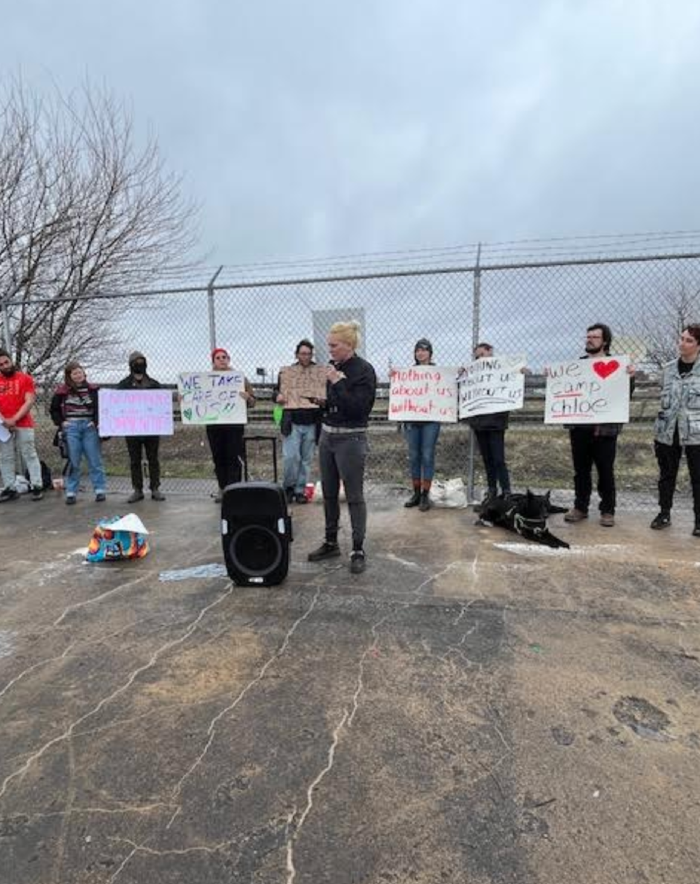
When learning about the residents of an encampment on the Delaware River behind the South Philly Walmart shopping center lot – also known by locals as the Walmart pier or the "Chicken Man pier" - I want to ask very basic questions. Why would someone fight to live outside? Why wouldn’t they take advantage of a shelter? Are they safe living there? Who owns that property?
Given the systems we live in, these are normal questions to ask, and so, if you are reading this and also have these questions, let’s put aside our assumptions and talk about this with open minds.
On Monday, March 16, I attended a conference held by mutual aid groups representing the residents of the encampment that goes by the name Camp Chloe. The event happened on the pier and was relatively small, with mostly representatives of the residents carrying signs to support them. Some residents attended but did not want to speak or be filmed for their own safety, The event was to bring attention to two major topics.
The first, that since October 14th, crews from the City of Philadelphia have swept the encampment, cleaning out shelters and also destroying personal belongings and identification. That means some residents of the encampment had been forced to vacate with little notice, and some without proper ID.
Let's talk about this slice of property, a group of unused piers hidden behind a shopping center.
The property this encampment sits on has a connection to an LLC ccalled SOUTH CHRISTOPHER COLUMBUS CAPITAL 1499 LLC, which planned to create a shopping center, apartments and townhomes along the “only developable piece remaining within the 1.2 million [square feet] of retail along Columbus Blvd.” The property is tied to developer Bart Blatstein, who you may know from several mega development projects and Tower Investments. The LLC has an interesting history including bankruptcy filings in 2022 and relationships with an executive who was indicted for fraud. Part of that fraud, notably, was luring investors into the Philadelphia Water Club project with the promise of demand [paywalled link], but no such demand materialized.
When that LLC and its ownership disolved in 2025, ownership of its assets were sold to South Christopher Columbus Capital 1499 Propco LLC, with the stipulation that "to generate the greatest return possible to creditors and investors, , the Wind-Down CEO has determined that the Property should be subdivided into condominium units before development and sale." That has not happened, but it looks like a Trader Joe's is slotted for the 1500 space, which is noted by Tower Investments as their "Sugar Mill Development."
In short, the owners of that land have moved that property through several LLCs and holding groups, with lots of plans but little development. Today, the site is only occupied by the camp.
311 complaints in the area of the property include graffiti on lamp posts, unshoveled snow and potholes (at the far end of the parking lot), as well as direct complaints about the encampment in several spaces along the waterfront in April and June of 2025.
Residents of the camp living in this space say they were not alerted to an ejection process (eviction for non-tenants). The Philadelphia courts portal shows no filings, even though both residents and the NBC report linked above mention the city themselves coming to clear the parcel of private property. L&I reports of the parcel of land do show that the piers failed inspection and were deemed unsafe in October and February. The city would have just cause to remove people from the pier for safety, but there are no records to back that up. Instead, residents say they were woken up with “cow bells” to their belongings being thrown away and identification destroyed, which made it difficult for them to find another place to go.
The other reason for the conference was that the mutual aid groups speaking for the residents invited Mayor Cherelle Parker to visit the encampment and hear their needs. As of the time of publication, Mayor Parker has not replied to this request.
While the city of Philadelphia does have shelters available for unsettled people, most do not allow pets (Camp Chloe is named for the encampment dog) and many separate couples and families.
According to Project HOME, homelessness increased by 9.8 percent in Philadelphia between 2023 and 2024, including increases in people seeking transitional homes, and increases in people in need in areas like Center City and South Philadelphia. You can read more about who the city counts as homeless on page two of this PIT document. So, while shelters are more crowded or don’t provide support for families looking for shelter together, there are more people who need housing assistance.
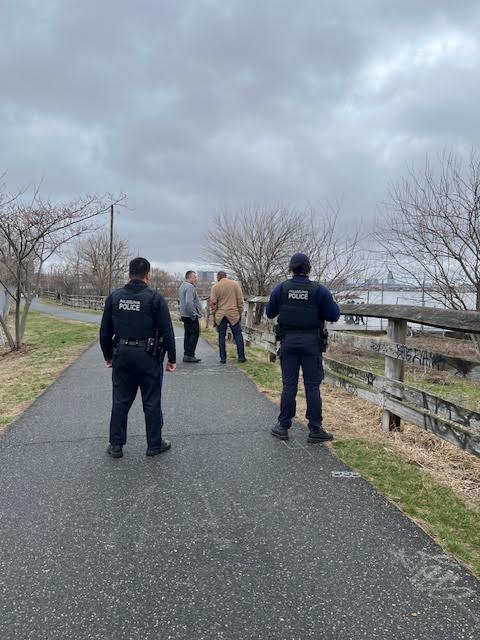
A long-time resident of Camp Chloe who introduced himself as Chris gave group demands for the city, which you can also find online.
- Safe Sleep Sites. This request is for designated safe areas where a camp can exist and “self police”. That would include a fixed address for identification and mutual aid (for example, unhoused people can register to vote with a nearby cross street they are affixed to). The request also includes hygiene, like water and trash pickup.
- A “Property Receipt” System. This request would protect camp resident belongings, which are often discarded as trash during clean outs. People who live in shelters and encampments have little opportunity to carry many sentimental or vital items, and in sweeps, those items are often lost forever. This request asks for advocates to contain and store personal belongings, and provide a receipt, if a camp or residents are moved.
- “Housing over Shelter.” With this request, residents are asking to understand how much of the $2 billion dollar housing budget in Philadelphia is being used for affordable housing (possibly like the modular development plans in North Philly) or “navigation centers,” which are shelters that allow families to stay with pets and their belongings temporarily. These centers offer plans and strategy toward permanent housing for entire families, rather than simply placing a roof over a head for a night. The Kensington low-barrier center is one such example, run by Prevention Point. For camp residents, that type of housing is far preferable to spending the night alone in shelters that might be unsafe. You can dig into the H.O.M.E. plan here.
- An oversight board with lived experience. This request asks to make official a board of the camp’s choosing, with people who have experienced homelessness. This board would work with the city for any camp clearings, safety requests or questions of personal belongings and identification.
Those are the requests of the group, who spoke about trying to understand the process of ejection, and why camp clearings happened without notice.
This is a lot of information, but I hope it gives you more insight into why people may choose living in a camp versus shelters, or why they build community in these ways, when they are vulnerable and have little support.
What can a regular person do to support our neighbors in this situation?
- You can leave comments with the city on the official correspondence form or with your local representative, sharing your concern over the treatment of your neighbors, or asking to understand the housing plan. Our elected officials are city servants, and you shouldn’t feel uncomfortable reaching out.
- You can call Councilman Squilla of District 1 at (215) 686-3458 and ask for information on the eviction.
- Several mutual aid groups provide food and hygiene items to people living in Camp Chloe. Start with the South Philly Action Coalition, where your monetary donations will go directly to impacted people.
- What kind of donated items are always in need? Socks, hygiene items like tampons and pads, toothpaste and brushes, combs and wipes are always useful, but a representative from the South Philly Actions Coalition says monetary donations can help the group route needs more efficiently.
- Talk to someone who lives on the street. Stigma is one of the main reasons people can’t find the help or resources they need, but most Americans are closer to living like our unhoused neighbors than billionaires. Say hello to the person you pass by every day to begin to change your own bias and make a connection.