My dinner with the godfather of hardcore
The ravioli was good.

I’m not sure what I expected from dinner with Vinnie Stigma, but I was not expecting a cozy, quiet night discussing family.
A founding member of pioneering New York hardcore bands Agnostic Front and (one of this author's favorites) Madball, Stigma is known for his big personality and punk style, even at 70-years-old. He’s the quintessential New Yorker from the Lower East Side, opinionated and proud. He’s worked in wrestling and film, owned a tattoo studio and leaned into the satire of “Stigma for President.”
In his book, The Most Interesting Man in the World, Stigma talks about playing with the idea of culinary school and his love of home cooking as way to strengthen family bonds. In those pages, he shares a few classic Italian American recipes, including a bolognese and fettuccini Alfredo, and ties them back to his life as a musician, complete with friends drinking his cooking wine.
Naturally, when Stigma announced a hosted dinner at NYC’s Superiority Burger, I wondered, what would that be like? Who would be there? What would everyone talk about? What would we eat? I eat at a lot of supper clubs and Michelin-rated restaurants for work, and I jumped at the chance to find out what kind of company a table of hardcore fans would be.
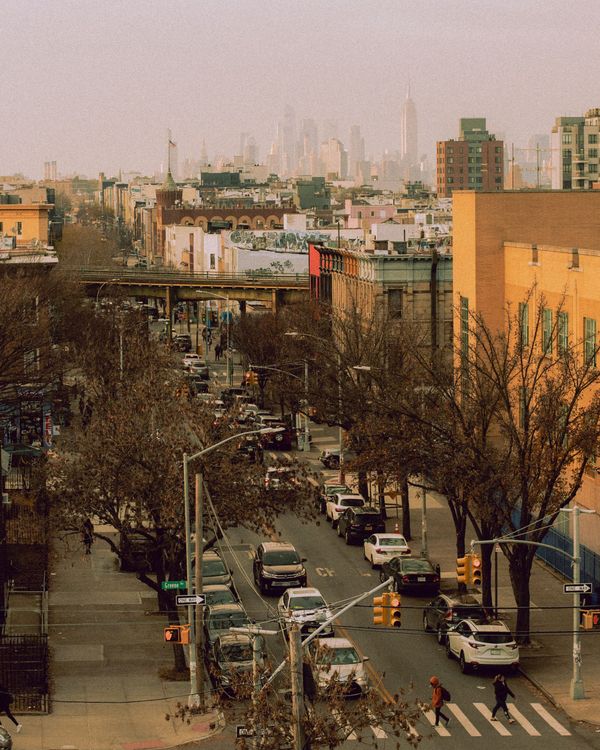
I arrived at Superiority Burger exactly on time, after a walk around the block, noticing how young and white and similarly-outfitted everyone seemed to be in Alphabet City now (was this still the neighborhood where I'd grab a slice of pizza half-clothed in a burlesque costume at 2 a.m.?). After checking in, I was led toward the back of the house, a small bar and private dining area near the kitchen. I ordered a Negroni from the classic cocktails menu, satisfied that the bartender was annoyed with me already, sufficiently old school LES, away from the kids wearing the same outfits.
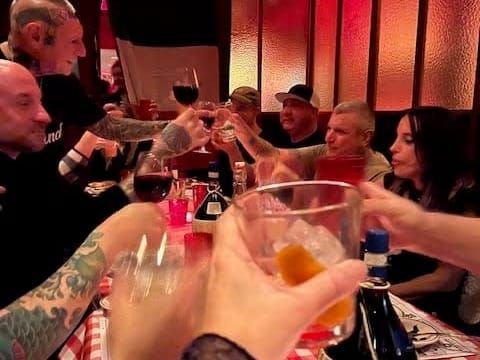
Vinnie came out and we all shuffled to our seats, passing Agnostic Front posters and hardcore nostalgia from the early 90’s to current day, including a photo of a very young Stigma, shaved head and all. Before we could sit, Stigma grabbed every one of the 14 diners individually to thank them for coming. Despite this being the second dinner of the night, and after 9 p.m., he was full of energy, pulling everyone into big bear hugs. Many of the salutations included questions about family or personal anecdotes, and I realized that many people at the dinner were longtime friends or neighbors, not simply fans. I already felt like I was witnessing private moments, or like I was the interloper at the family dinner.
Despite growing up in Brooklyn and in the New York hardcore scene, I’d never met Vinnie Stigma before, so I greeted him with a story about my earliest shows in venues that are long gone. He’s smaller than I remember, age has thinned him out, but not his personality, which was still larger-than-life.
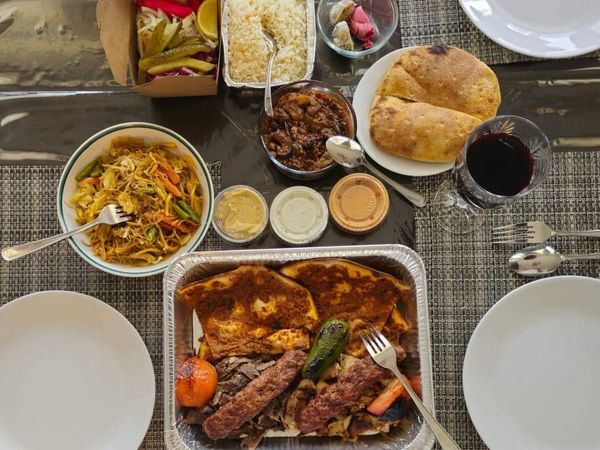
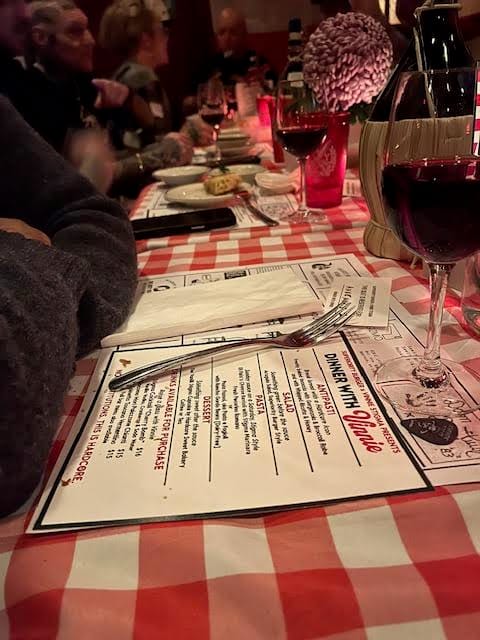
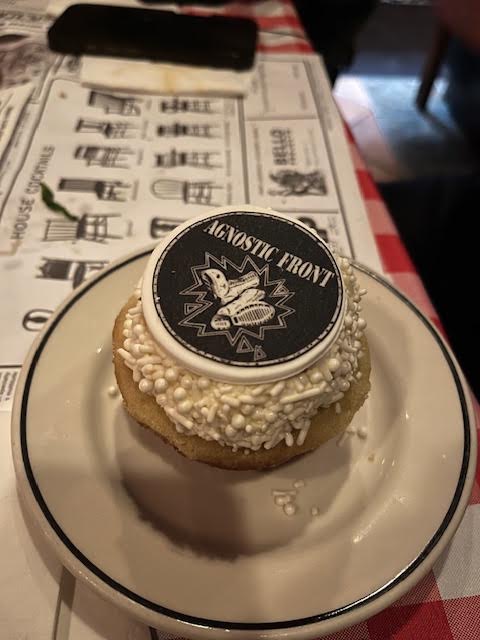
Stigma had planned the menu: focaccia with broccoli rabe, arugala salad, either a ravioli dish or pasta fagioli soup for your entree. Dessert was a vanilla cupcake embossed with the NYHC logo or Agnostic Front boot, and drink options included the Stigma Cherry Bomb, with vanilla vodka, cranberry juice and seltzer water, or two wines. Stigma chose the red, I chose the cocktail because I can’t turn down a themed drink, even when I had half a Negroni left.
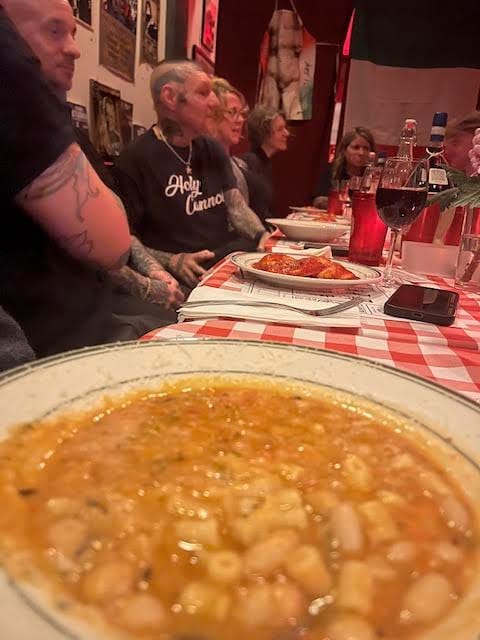
Conversation was light and easy going from the start. He asked about someone’s son and how the rest of the family was. The old neighborhood came up a lot: people who had moved on, places that made people feel good. Despite several glass refills, no one was boisterous, or overwhelming. And by the time the entree was served (I went with the ravioli, which made its way to the table from Di Palo’s Fine Foods), discussion turned to music. Specifically, the new guard of hardcore, Turnstile and Haywire, fresh off pop-up shows that had gained mainstream attention.
“Do you think anyone will remember Haywire in 20 years?” someone asked.
“I just can’t listen to it in my car,” a man across from me, another musician, shook his head.
They chatted about the “stunt” shows until someone else at the table drew parallels to Fugazi’s 1993 Washington Monument show. Stigma shrugged, holding his wine, "that’s the new school." He’s already made his mark, there’s nothing to prove.
Between courses, he made his way across the room, pausing at each person, leaning on each seat to have a full conversation with each dinner guest. By the time he reached me, I had anecdotes of old Brooklyn queued up, but he had his own questions.
“The Electric Factory?” he smiled big. We talked about Franklin Music Hall and the new Spring Garden corridor, the TLA and cheesesteaks (his favorite is not one of the big few). It’s not the first time a longtime musician would hear I lived in Philly and ask me about The Electric Factory.
“So, why a seated dinner?” I asked him.
“My book! The recipes…” he started. It’s true the marinara from the Di Palo ravioli dish was in his book, and the pasta e fagioli too. I tried to press on the personal stories, but he had no interest in talking about himself. Instead, he wanted to know what I thought of the ravioli. Then he pulled us all up from our chairs for one group photo before the night ended.
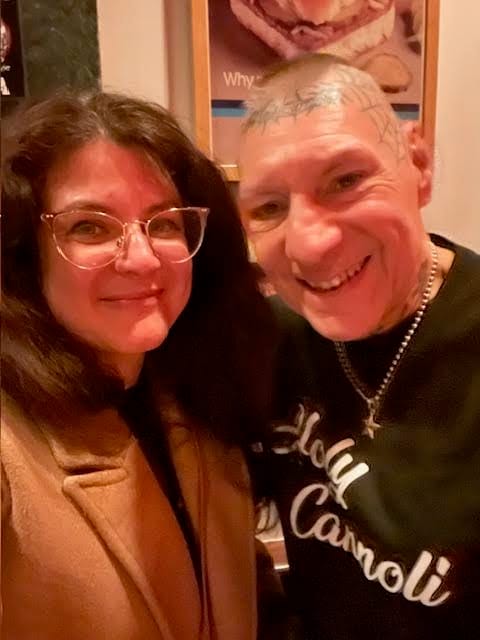
My dinner with the godfather of hardcore was stunningly wholesome. This wasn’t an influencer event, though it was an influential person. This was a man surrounding himself with people he enjoyed, food he wanted to eat, in a neighborhood spot baked into his blood. It was a family dinner with cut-off tees and tattoos and cool haircuts and cupcakes from Hardcore Sweets Bakery.
Hardcore music had gotten me through some of the toughest moments of my life by giving the anger an outlet, an art form that met me where I was emotionally. I expected an angry dinner to mirror that, and I was instead met with the evidence of what happens when you get over that anger and build your own support network, the way you want it.