Clean out your kitchen to help mutual aid groups
A small thing you can do that takes just a few minutes of your time
Sometimes an event occurs in Philly, and it’s covered by mainstream media, but folks will ask me why I didn’t cover it. If an event can lead to more misinformation, or has taken a life of its own, I weigh whether amplifying it further will hurt anyone. I ask myself what sharing the information will do for the community.
In my article about covering harm reduction, I talked about understanding the tricky areas in which harm reduction can be technically illegal, and leaving out some details that could do more harm than good. It’s a difficult ethical balance journalists need to explore every single day, and writing about mutual aid is trickier because so many policies go against the best efforts for our neighbors, leaving community organizations with little recourse but to play on the line of law.
In fact, just this week I watched a PPA worker ticket one of my colleagues who was double parked for four minutes, dropping off supplies to feed people, in front of my own driveway. Even after many of us ran up to him to explain, he handed them the ticket. The system can feel rigged against people who need to be flexible and fast enough to make a difference.
But this week I believe there is something the community can do to help.
Recently, I wrote about the health department’s visit to Saturday outreach with The Everywhere Project, a mutual aid group that, besides being on the city’s own list of places for people to find a free meal, provides harm reduction and wound care for people that have been largely ignored by charities. The Everywhere Project has been a steady force in Kensington, when many city efforts come and go. They have warehouse space, a truck, a full team and many volunteers. This is a group of professionals doing their best in difficult circumstances. They’re an organization people can count on and go to in their worst moments. Instead of working with them, the city came out in a 'gotcha' moment to catch them messing up, and to make their job more difficult. TEP had their paperwork updated and handy, and the food was hot; there was nothing that would allow the city to shut their outreach down.
This week I learned of another community organization that feeds thousands of people a week, that was visited by the Department of Public Health, and was shut down. This non-profit organization helps power many other grassroots groups to do their work across the city. While that organization is accepting responsibility and taking care of what they need to do, it highlights a bigger problem that could be hurtful to many mutual aid groups soon, if we look at the trend of the city showing up at outreaches.
What you can do
Part of the health department complaints, which I have read, could be helped by better organization across the multiple groups using spaces like this. And that’s where the community comes in.
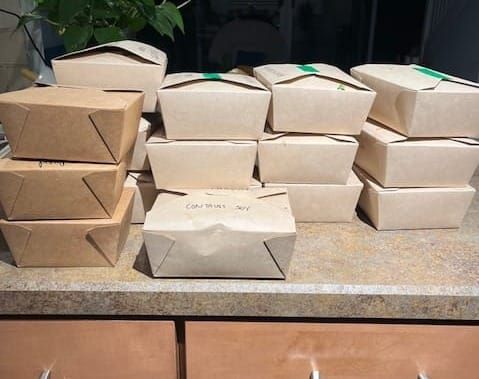
If you have organizing boxes, storage containers, especially food-safe containers like Cambrio and other kitchen organizers, take a look through your stash for anything you might be able to donate. Sterno or other quick heating tools and catering supplies are also helpful.
Finally, if you are SafeServ certified, volunteer your time cooking for mutual aid groups. This is a great option for people who don’t have the time to go out to volunteer, but want to make a big difference.
Studies, and my interviews, show that quality hot food can make a big difference in support, and you can be a part of that by cooking and reaching out to the nearest group who can accept that food. My monthly calendar lists groups that do outreach and who accept food.
Heating, food-safe containers, coffee pots, clean water containers, cleaning supplies… these are the unglamorous items that mutual aid groups spend money on to get the daily work done. These often go unremembered when donation time comes around.
If you have items to donate and need help getting them to the right places, email me at annemarie@theplatia.com.