Meet Ryan, a former Kensington resident
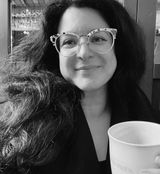
Editor’s Note: When I worked in large newsrooms, we often reported on counts of unhoused populations or overdose statistics, but it’s difficult to care about people living in a different reality when you can’t connect that to your daily life. So I’ll be publishing interviews with people I meet, with their permission. This is their life through their eyes. As you read these interviews, think about that person's reality and the ways we’re not so different after all.
Last weekend I sat down at a coffee shop with a man named Ryan who’s spent many years in Kensington and bouncing around Philly, stuck in the cycles of substance abuse and poverty. We bonded right away over complex PTSD and the small things you do when you’re hyper-vigilant; for him it’s double checking locked doors, and for me it’s keeping a drawer of free napkins. That reminded me how close any of us are to each other, and how the stigma of substance abuse works to separate us from our own community members.
Ryan is 36-years-old. He is thin and has long hair tied back into a pony tail. His clothes are no different than the other 30-somethings at the coffee shop, jeans and a t-shirt. But Ryan’s life is very different.
Annemarie: Tell me about how you grew up.
Ryan: I wasn't born in the United States. I was born in Romania in 1990. The orphanage that I was in… the best way that I can describe it is like a prison. It was very overcrowded. It was extreme poverty in these orphanages.
There was a family here in the U.S. that saw a TV special about the packed orphanages, and so that was my adoptive family. So I get adopted. My cousin gets adopted. And yeah, we came here to the U.S.
Annemarie: How old were you then?
Ryan: I was four. I don't think I spoke Romanian or English. I don't remember not knowing I was adopted, but I don't remember how… It's really disorienting because I had sisters that were their actual children.
When I was 12 or 13, my dad pulls me into this counseling session. It's just me and my dad and his therapist. My dad tells me that he's gay and he's gonna leave my mom, but then I'm the only one that knows.
Annemarie: You were very young. How did you cope with that?
Ryan: Through all of that, nobody in my family was addicted to drugs, or really drank. But I feel that a lot of young kids have this fascination with psychedelics at some point. Like, wow this is cool man, I listen to Pink Floyd and maybe I'm gonna like acid.
So, by the time I was 13 or 14, I was experimenting with a lot of different drugs. I got into cocaine when I was 15. My parents were split up at this point, and my dad was involved in this new life. I wasn’t being supervised.
Annemarie: Where were you getting those drugs?
Ryan: I don't remember growing up where drugs weren't available. The culture that I was surrounded by, and the people around… it was drugs. It wasn't abnormal to be using… I understand your question, but I don't even know how to answer it because I don't know anything different.
The first couple of times that I tried to get clean, Margaux [his friend] always tells me the story… that when we first met, we were drinking wine one night, and I asked, you don't do anything else? You don't smoke crack or anything? And she's like, no. Now, after trying for years, I was able to see another side of the world.
Annemarie: Take me back to what it took to get here.
Ryan: I was truant for a lot of my high school years. I was placed in an alternative school in Bucks County, going all the way out there, and it wasn't really like a school. They were making us do yard work and stuff.
Then I got arrested for retail theft. I was a juvenile, and I had to do this program where I was going to the mountains on the weekends, like boot camp, right? That made me resent authority and the court system. When I went back to court after that, the judge asked "Are you gonna go stay with your mother?” She didn't want me to live there anyway. And then when I got back to the house, I was like, yeah, I’m not staying here.
So, I was renting an apartment with two friends, paying rent and working. I was actually making good money for my age. I had disposable income. My best friend at the time, he was selling heroin, and I would go with him to Kensington to buy it. I wasn't using it. I was the one friend in my whole group of friends that didn't do it.
Then one day I was like, I want to try, and then he shot me up for the first time.
I still remember exactly that. I remember exactly what it felt like… feeling like this is filling the void that I've been trying to fill my whole life. You know, this empty hole inside of me. Finally, I felt normal.
Annemarie: You know, a lot of people feel that way. Like they are different from everyone else. I feel that way a lot.
Ryan: Do you feel like you're constantly searching for something to fill it?
Everybody else is out here existing and being happy and functioning normally and I cannot function without it. Then when I felt that, I can live, I can live on this. So immediately, I need to keep doing this forever.
Annemarie: Yeah. I totally get that.
Ryan: The danger is finding something so hazardous that makes you feel it's filling that void.
So when I was 20, I met this girl in Bucks County, and we started dating, and then I moved in with her [and her mom]. I lived with her for a few years, and we got married. We had a kid. She [ex-wife] was also an addict.
My son was born addicted to methadone because she was using when she was pregnant, and they put her on methadone so she could maintain some sort of stable life. My son is 16 now. My ex… she passed away two years ago from substance abuse.
She moved to California, and I don't really know what happened. My son was very close to her mom… and she actually just died too. Now I have no connection to my son because my mother-in-law was my line. Now he’s with my mom.
Annemarie: Do you look for her? Does she look for you?
Ryan: No, no.
Annemarie: And now he’s…
Ryan: Sixteen.
Annemarie: Which was such a critical age for you.
Ryan: Yes it was. At this point, as far as my mother, I kind of locked that up. You know, I just accepted that. Annemarie: In your 20’s, you have a lot going on, with your ex-wife and son. And then you found yourself on the street.
Ryan: I just went right back to it and was in the streets for like six years straight here in Kensington.
Looking for this month's mutual aid volunteer opportunities and free civic events?
Annemarie: What do you remember most from this time?
Ryan: Kensington on the street was crazy. It was traumatic. I was in a lot of shootings. There's a lot of violence. I watched people get shot. A lot of close calls.
I was on my way back from the clinic one day, and I rolled a stop sign. I got pulled right over. Told me I had a warrant in Bucks County for a fine from like 10 years ago. So they locked me up.
When I went to the 21st district, at that point, my arm was really swollen. They took me to the hospital, and I was handcuffed to the bed in the hospital for like a week.
Annemarie: Because you had a warrant from unpaid fines?
Ryan: Because I had a warrant, yeah. I had police officers in my room with me the whole time. They were like, "we gotta get this fine thing,” and finally, Bucks County let me go.
Annemarie: Did you ever go to Wellness Court (the city’s harm reduction program that has very missed reactions from substance abuse experts)
Ryan: I haven't because every time that I've ever got arrested, I had warrants, I go straight to jail. Wellness Court is for people that don't have warrants. It's supposed to be a diversion from going straight to jail.
Annemarie: I always wonder, what does time feel like in Kensington?
It doesn't feel like time has any dictation because most people aren't working and you're sleeping in places that are not bedtime places, you're not bringing a kid to school. The only time that mattered would be certain businesses being open or closed. Aside from that, I feel like I remember constantly feeling trapped there.
It takes a lot to climb out of it. It's not that you can just walk away from it, and get out of it.
Annemarie: Tell me about that, about climbing out of it.
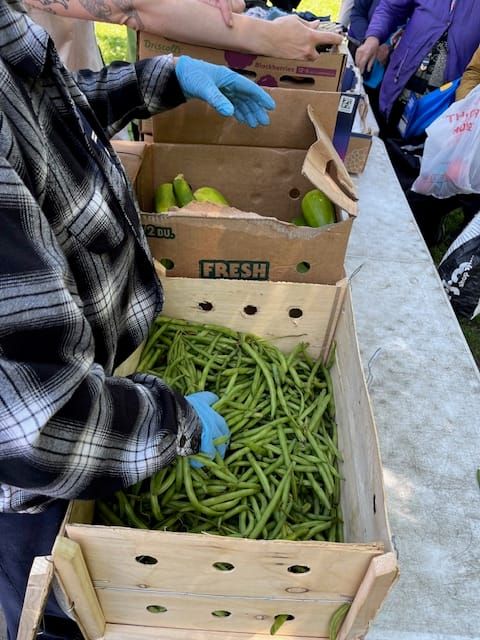
Ryan: I met Margaux [Murphy, of Sunday Love Project] when I was homeless. She was serving food on the streets, and I was in line. She was very frequently serving food, so I would see her all the time. I knew I was gonna get something good to eat. She was always sourcing foods from really great places. So I gravitated towards her.
Annemarie: I’m so glad to hear that good food makes such a difference.
Ryan: It makes a difference. Being out there, we're used to peanut butter and jelly, stuff like that all the time. When people come through with something really good, some wholesome food, that matters. It initiates the conversation. It’s a perfect way to break the ice for people on the streets.
Annemarie: Food can be such a motivator.
Ryan: I started volunteering, when I was trying to get clean, with Sunday Love Project… we would talk to restaurants. We’d have chicken parm, package it and take it out to the street. People knew when our van would show up, yeah, there's some good food coming in there. People would run to us.
Annemarie: What’s life like now?
Ryan: I don't use hard drugs. I still drink. It’s been almost a year.
I’ve been on and off in my sobriety, but now I'm probably the most stable and getting to that point where I'm not obsessing 24/7 about using. I am focusing on making music and filming, and it's been very therapeutic for me.
I'm on methadone. At some point, it felt like it was helpful for me, but now I hate being on it. There's no euphoria. I can't even necessarily feel that I'm on it, except it just makes me talkative. It makes me drag, makes me tired, and I can't wait to be done with it. So that's where I'm at now, trying to make a plan for that.
I live alone. It was a weird transition for me. I slept on the floor for a long time because the bed felt weird to sleep in. Using a fork and a spoon and a plate was strange to do for every meal. All things that I had to like acclimate myself to. I'm getting to a point where I'm not so hyper focused on security 24/7.
I'm still scared of jail every day of my life. I'm terrified of the police. I feel like I am constantly reliving my jail experiences, feeling trapped.
I make experimental lo-fi. I love synthesizers and I play guitar and bass. So I am doing that, and then I'm trying to be helpful to Sunday Love, as much as I can be. Anytime there's an opportunity, I try to do the best I can because I owe so much of being where I am today to Sunday Love. Seven years ago, I would not have that kind of stability where I could keep an appointment or even care enough.
Annemarie: What else do you want people to know?
Ryan: Recently I've been thinking… people don't have to be scared. People don't have to be so hesitant. If you talk to most of us [in Kensington], it's gonna be a similar experience as if you were talking to somebody that's not in that situation. Most of us are really intelligent and can hold a conversation.
This is a chapter of our lives. That’s all. This isn't our whole identity. For a lot of years, I didn't understand that. I thought that drug use and pain and misery was my identity, but it's a chapter. I'm still struggling with it, but I am somebody outside of that. I'm somebody beyond that. Most of us, if we are lucky enough to get to the other side of it, we're successful, creative individuals who end up doing great things.
I would ask people to think for five more seconds before you make that judgment, or decide to pass someone by when you know that they could clearly use some sort of help that you are able to provide to them.
Most people can benefit from a drink, a snack or something. Something simple can change somebody's situation or change someone's day. A small act of kindness can give somebody a little bit of hope. I see you as a human, I want something for you. Just engaging, you change somebody's life.
That’s what it was for me. Just one person talked to me, and I decided I wanted something different.
How you can help
Ryan is working in video production and is available for social video and videography gigs. Let me know if I can make an introduction.
Ryan mentioned the amazing work of Margaux Murphy and The Sunday Love Project. You can donate to them, or their Kensington storefront, Greater Goods. They provide a safe space for people in the neighborhood to get fresh food, learn how to cook to nourish themselves, and provide early-childhood nutrition and food classes, too.
Donate to them here or sign up to volunteer.