What we can learn from a 16-year-old autonomous community in Athens
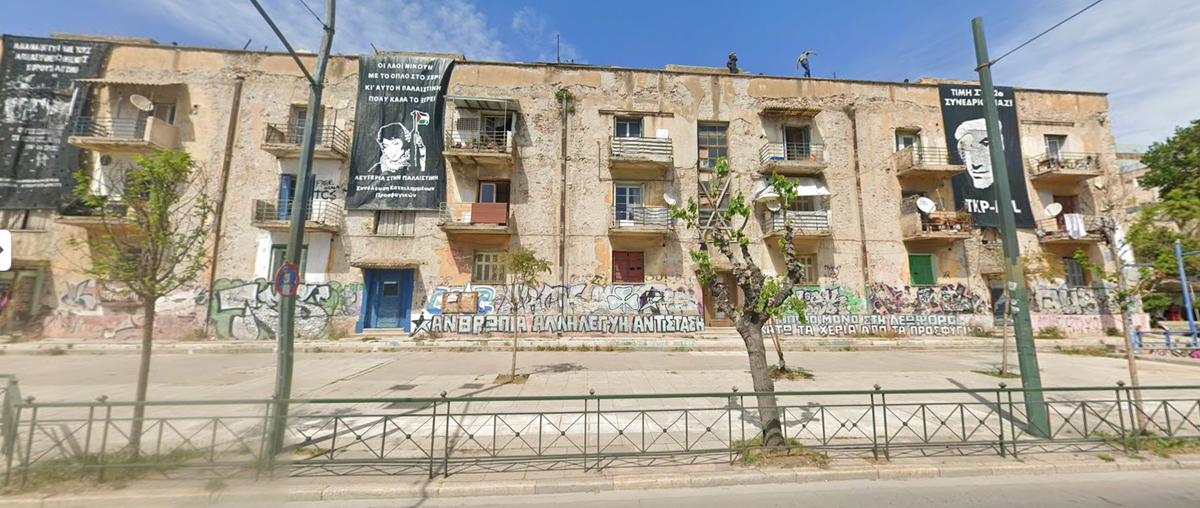
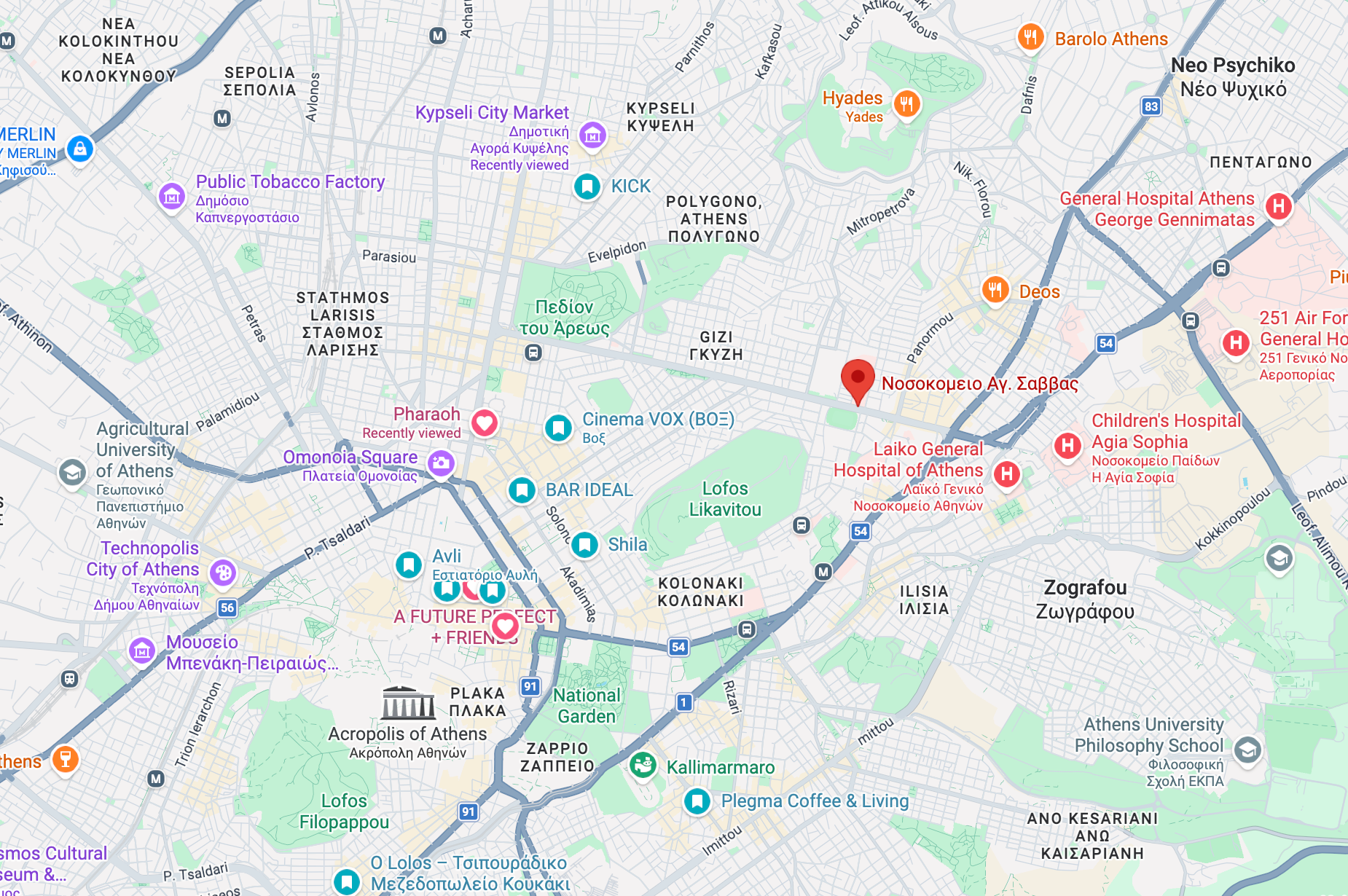
Prosfygika sits in Athens near stadiums, hospitals and municipal buildings. While other areas sprout hotels and condos, this corner has fought to resist gentrification.

If you're new here, thank you! You can read more about me, and why I'm writing independently and how you can help tiny newsrooms at this link. Every share, donation and email counts tremendously! - Annemarie
There’s a misconception that people living in encampments want to remain outside of society. That they are actively choosing not to participate in the community because they live in tents or squat in crumbling buildings, rather than a city-run shelter. But what if being in a commune was actually teaching people how to be more civically involved?
A community in Athens, Greece has been challenging assumptions about what a commune can achieve and how they work within their home city and still stay autonomous. There’s a lot we can learn from how they set up their internal pipelines, even as they fight to maintain oversight of their home against the Greek government, who has interest in the choice plot of land and Bauhausian buildings, and against a one-sided mainstream media.
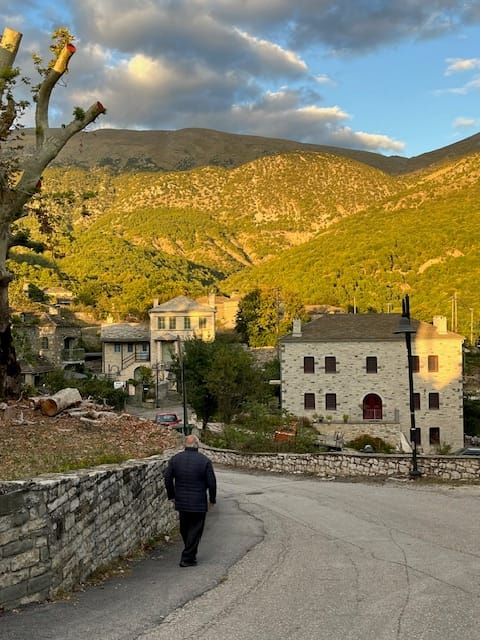
Prosfygika (say: pros-fee-yee-kuh) sits in the central part of the city, near stadiums, hospitals and municipal buildings. While other areas of Athens sprout hotels and luxury condos, this corner of the city, along with areas like Kypseli and Exarcheia, has fought to resist gentrification.
The area that makes up Prosfygika was quite literally made to be a refuge. Built in 1933, it became home to migrants escaping turmoil in Asia Minor, and continued to be a place where people could find a roof during the World Wars and other conflicts. Between then and now the derelict buildings attracted drug mafias and crime, until a group of squatters convened to organize all the residents.
The buildings have been inhabited by the current commune for 16 years, and that includes about 400 people who speak approximately 27 languages. But, says a resident of Prosfygika I spoke to via Zoom on Tuesday morning, “our common language is solidarity.” Solidarity and resistance language has been photographed as graffiti on the walls surrounding Prosfygika many times.
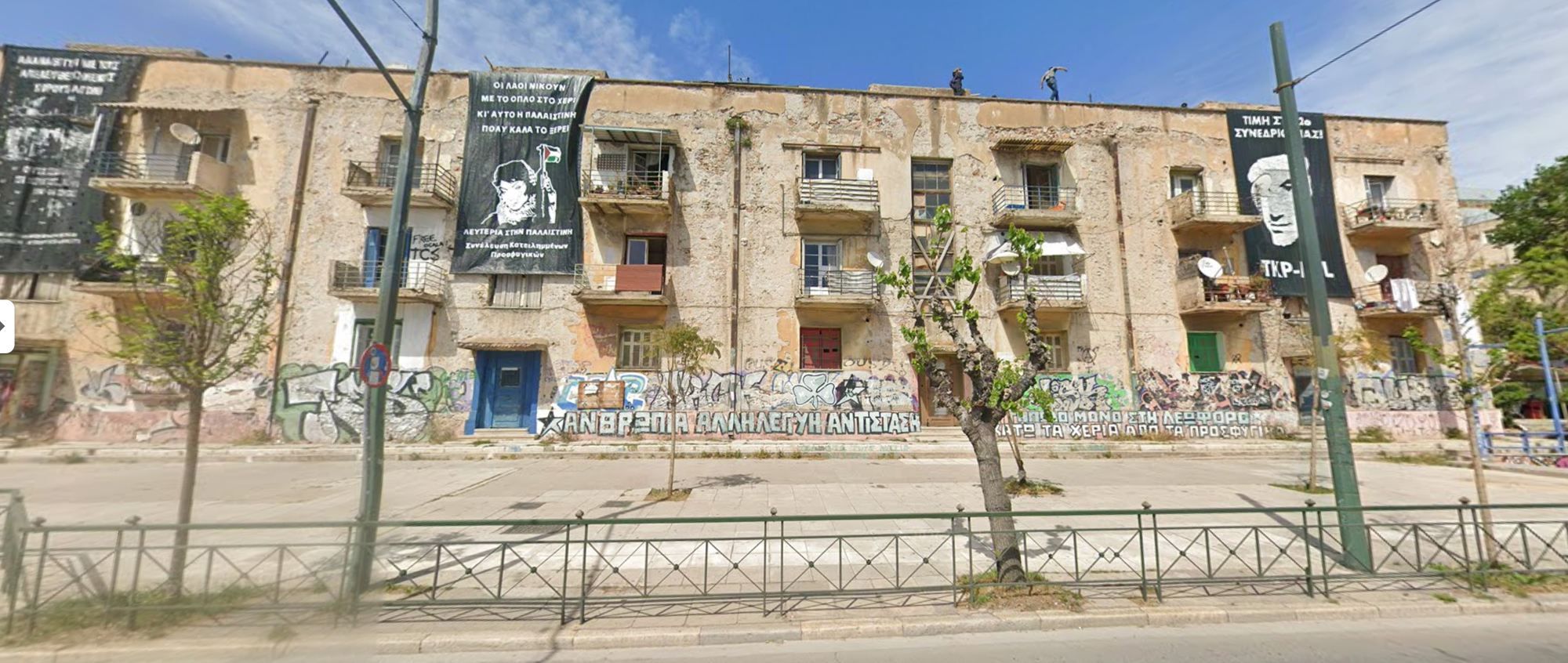
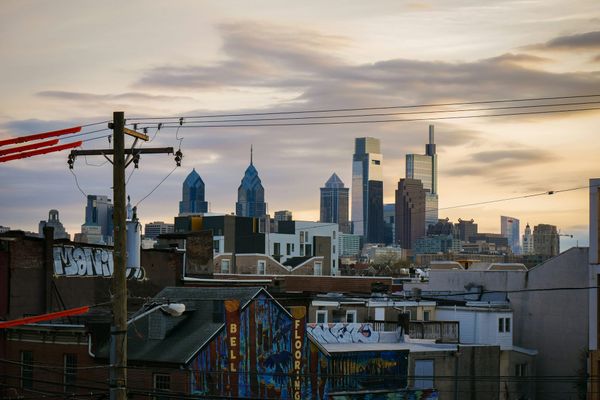
I asked to speak to these residents because, as an American who has felt at home in Athens, I can understand why people would fight to live there. But also, watching local encampments in Philadelphia broken down without plans, with residents sent to unfit shelters, and watching mutual aid communities in my area struggle to keep going, I thought there could be lessons in how Prosfygika has continued to function as a group for all this time. I Zoomed with Elo, Corsa and Ioanna, residents and solidarity members of the commune, from my living room, to Prosfygika.
The residents of the commune are families, the elderly, young people and everyone in between. Despite drastic cultural differences, the community collaborates to build out working systems that form a society. Rather than show off Prosfygika’s independence, these working groups are exemplatory of just how plugged into the Athens ecosystem this building of “squatters” actually is.
The 22 systems, or “structures,” put together by the residents of Prosfygika in the last 15 years include a library, technical workshop, a cinema, a collective kitchen, an arts working group, clothing structure and communal cafe, as well as basics like a food redistribution working group, a bakery and a self-education structure. Each one is run by commune members with team leads who organize duties and think about long term plans. Each one blossomed out of a necessity that could benefit the entire collective.
The bakery, for example, was one of the first systems created. Members of the bakery structure work together every day from 7am to 2pm, baking and selling food. Those who can afford to pay, pay for their bread. Those inside the structure who cannot afford the bread might perform other work, or if they’re not able to for illness or other reasons, food may be distributed to them weekly. Elo says, “This works because we know each other. We know about the problems we have, and we speak about it, and we’re able to find solutions together.”
People from the neighborhood, like visitors or guests of one of the hospitals nearby, can visit and purchase bread as well; it’s not solely for Prosfygika residents. Bakery structure members partner with local vendors to secure ingredients. All of these visitors create a steady flow of people entering Prosfygika to meet members and see the workings of the group. “The collective bakery is serving the relationships to the outside of the community,” Elo says. The bakery creates an outside hub of friends and neighbors the commune works closely with to stay connected to the city.
For other food needs, there’s a collective kitchen, where a “solidarity crew” of friends (like Ioanna) and neighbors cooks for people in-need, both in the community and outside. The kitchen is within the walls of Prosfygika, but aims to create a bond with folks outside of the walls. Monday through Friday, the food is available for anyone to take whatever they need.
Additionally, members of a Prosfygika logistics structure go to nearby markets three times a week to collect food to hand out in the community or cook in the kitchen. Growing food in the middle of Athens creates a challenge, so the group aims to reuse food waste from friendly neighborhood grocers, who might throw the produce out instead. Through these holistic methods of vendor to kitchen to public, Prosfygika is part of the Athens food ecosystem.
Prosfygika also manages an education system called “the children structure and self-education,” which helps to provide educational materials to everyone who wants to learn, while also encouraging children to attend public school in the city. “Of course, we want them to go to public school that provides them a basic level of education, let's say, even if we don't agree in some parts,” says Ioanna. The “self education” portion of this structure handles a variety of learning options. It might assist a young student who wants to split time between public school and home learning, while also creating a Greek language learning plan for a family from another country. Of course, learning Greek is encouraged because it helps commune members make connections with the outside world. Because, while the community is self-sufficient in resources, their mission is always to remain part of Athens at-large.
In addition to learning, the children’s group provides activities. When these activities fall during the same hours as the "women's structure,” the men of the community step in to organize activity time. And the final, and possibly most important role of this structure is to plan appointments for doctors visits, ensuring that all children are vaccinated and have proper medical care. Even migrant students who don’t have proper identification find ways to receive care through nearby hospitals that are sympathetic to the collective.
All of the so-called structures fill a gap of something community members need to survive, but they also create bonds between members who work together to solve problems. The structures function as a knowledge sharing system that transcends performing work for a paycheck. Elo says that when the leads of each structure consider the future, they also consider, “how to transfer the knowledge and also the common culture that comes with the work. Not to create something only based on work, or on capitalism, or on creating money.” Leads are encouraged to include everyone who is curious about each structure, always pass on information and consider all voices in how work is done, which builds comradery amongst members. “How we see also the common work, or the work for the collective, is that we are also building relations between us.” Having common goals gives the group missions to work toward together.
And as for crime, the three representatives say that theft is not really an issue among residents of Prosfygika, although it's certainly not allowed, neither is violence against any community member. And with so many families and elderly inhabitants, this may well be true that crime is low. But drugs are present, and bring those elements into the building from outside neighborhoods. To handle this, Prosfygika considers the tenants of harm reduction to care for members going through addiction. Corsa says, “People that are addicted to drugs, they are part of the community, and they get supported also with communal ways of fighting addiction – but they have to commit to fighting these addictions.”
But lest you think this is a mutual aid paradise, the state is bringing complication to Prosfygika. Given the history of the buildings, and the very plum location in central Athens, the local government has introduced a plan to renovate the neighborhood. Residents have yet to hear from a representative on where they are supposed to move when work begins, or whether they can stay in the buildings.
“We have only one plan. We will not go anywhere,” Corsa says. Athens plans to upgrade the buildings to create “social housing,” which Prosfygika members point out, it already is. And they’re asking the government to be part of the renovation. “We don’t see ourselves as an isolated island of freedom,” Elo says. “We understand that we are an autonomous and liberated ground, but within a nation-state also.”
Outside of the community, 4,000 friends, residents and neighbors marched down the Athens streets with signs and banners in solidarity with the residents who want to remain in the homes they’ve taken care of for over a decade. So while Prosfygika is a self-sufficient commune, it’s very much not alone. Protests have spun up around Greece and in other countries, even as other camps learn from this fight. Academics, photojournalists, lawyers and other professionals are on standby to assist residents, and document how we can replicate what’s happened at Prosfygika, an example of what a collective community in a major city could be.
How You Can Help:
- Contribute to Prosfygika’s firefund, which continues to assist with maintenance and living costs for residents as they fight legal battles.
- Attend the community’s ongoing calls for action. They request members of the International academic space and media, specifically, but all are invited.
- Learn about Aristotle Chantzis, who has been on a hunger strike since February for “the immediate cancellation of the contract of the region of Attica and the Cultural Ministry of Greece.” Residents are also asking for inclusion in rebuilding plans of their home, and acknowledgement of the community living at Prosfygika.